Fabric, wood & materials
What Is Sofa Foam Density and Why Does It Matter? Cold-Cure, Standard Foam and Fibre
Why do some sofa seats sag after a year? The answer is foam. Learn about foam density, cold-cure versus standard foam, firmness, seat layering and how to judge foam quality when buying.
By The Mahd Mobl workshop· 7 min read· Updated

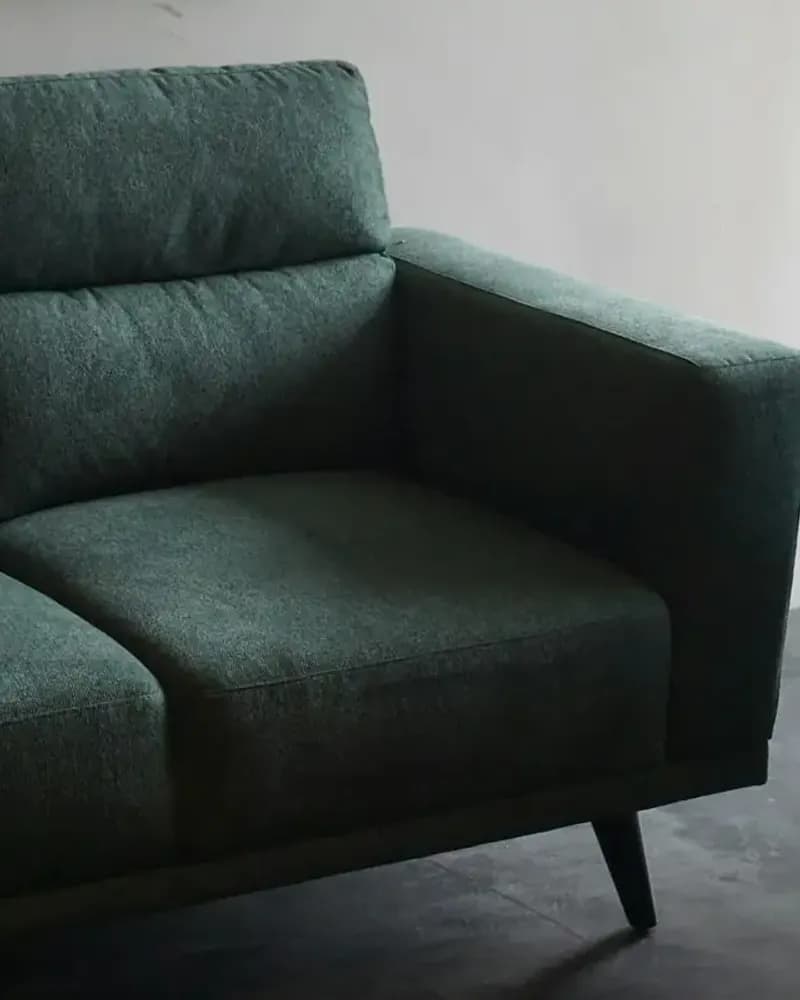
It may have happened to you: a sofa that felt soft and inviting on day one has, a year or two later, sunk where you always sit, and your shape stays in it when you stand up. In most cases the culprit isn't the fabric or the frame — it's the foam. Foam is the heart of the seat, and its quality determines, more than anything else, how many years your sofa stays comfortable and shapely. Here our upholsterers, who cut and fit dozens of metres of foam every day, explain what foam density is, which numbers are right and how to judge foam when buying.
What is sofa foam?
Sofa foam is polyurethane, a spongy material formed when several liquids react chemically, trapping tiny gas bubbles in a flexible, porous structure. The number, size and strength of those bubble walls determine the foam's properties.
What does density mean?
Density is the weight of one cubic metre of foam, in kg/m³. Foam of 35 density means a one-metre cube weighs 35 kg. Higher density means more material per volume and stronger cell walls, and therefore:
- Greater durability: it settles more slowly and holds its shape for years.
- Better support: you don't sink in, and your back stays well positioned.
- Higher cost: because more material is used.
The right density for each part
- Seat of an everyday sofa: 35–40 kg/m³ (cold-cure)
- Seat of a rarely used classic sofa: 30–35
- Back: 25–30, often foam combined with fibre for softness
- Arms: 25–30
- Scatter cushions: fibre or feather
If a seller quotes seat foam below 25, the sofa isn't suitable for daily use and will soon sag. All our sofas use 35 or 40 cold-cure foam in the seat — the Mahour sectional, for example, uses 40.
Cold-cure versus standard foam
Standard (hot-cure) foam is made in large moulds with heat. Its cells are smaller and more uniform; it's cheaper and common in budget sofas.
Cold-cure (high-resilience) foam uses a different formula at lower temperature. Its irregular, more open cell structure gives more resilience (it springs back faster), better breathability, greater durability at the same density and a more natural feel — soft at first, then firmly supportive. It costs more, but almost every reputable maker uses it for seats.
Firmness is not density
Density indicates durability; firmness is how much force it takes to compress the foam — how soft or firm it feels. You can have high-density soft foam (soft and durable) or low-density firm foam (firm but short-lived). Cheap foams are sometimes stiffened with fillers so they feel "quality" in the showroom, then lose shape quickly. A firm seat in the shop is not proof of quality.
Seat layering: the secret of comfort
A quality seat isn't one block of foam. From the bottom up: webbing and springs that spread the load; a firmer foam layer for core support; a softer layer for initial comfort; and a fibre wrap that keeps the fabric smooth. Budget sofas often place a single low-density block directly on a board.
Fibre, feather and memory foam
- Siliconised fibre: polyester fibres coated to stay soft and lofty, used in backs and cushions; they puff up again after a shake. The Tara chair back combines foam and fibre.
- Feather: the softest feel but needs constant plumping; mostly in luxury cushions.
- Memory foam: responds to body heat and slowly moulds to you — common in mattresses, rarer in seats because it's harder to get up from.
Signs of poor foam
- Sagging within two years — low density.
- A strong smell in the first days (a mild new-foam smell for a few days is normal).
- Crumbling edges.
- Not springing back after you stand.
- Very firm at first, then suddenly soft after a few months — filled foam.
How to judge foam when buying
- Ask the density — a reputable seller knows the exact seat figure.
- Ask the type — cold-cure or standard?
- Sit and stand — the seat should recover within seconds.
- Press the front edge — it should be firm; soft edges collapse early.
- Unzip a cushion if possible — quality foam is even, with a neat fibre wrap.
- Ask about the warranty — some makers cover abnormal settling for a set period.
Normal settling
Every foam, even the best cold-cure, softens slightly in the first months. Typically a seat settles one to two centimetres over three to six months and then stays stable. Deep, uneven dips in one spot are not normal. Rotate removable cushions every few weeks so they settle evenly.
Lifespan
Quality cold-cure foam of 35–40 density lasts roughly eight to twelve years in normal home use. After that, if the frame is sound, replacing the seat foam (and the cover if needed) makes the sofa almost new at a fraction of the cost of a new one.
Summary
Foam density is the most important hidden number in your sofa. For an everyday seat choose 35–40 cold-cure foam, and don't trust momentary firmness in the showroom. The seat should be layered, recover quickly, and the seller should be able to state the foam specification exactly. For other quality signs, read signs of a quality sofa.
Frequently asked questions
What foam density is right for a sofa seat?
For an everyday sofa, 35–40 kg/m³ cold-cure foam. For a rarely used classic sofa, 30–35 is enough.
Is cold-cure foam better than standard foam?
Cold-cure foam is more resilient, breathable and durable, so it suits seats better; standard foam is cheaper.
Does firmer foam mean better quality?
Not necessarily. Firmness and density are different; some cheap foams are stiffened with fillers but settle quickly.
How long does sofa foam last?
Quality cold-cure foam of suitable density holds its shape for about eight to twelve years in home use.
Tags:foam densitycold-cure foamsofa quality
The Mahd Mobl workshop
Production team: joinery, upholstery and carving
Technical notes on wood, foam, upholstery and furniture care, from the people who build sofas every day.